
TokenPost.ai
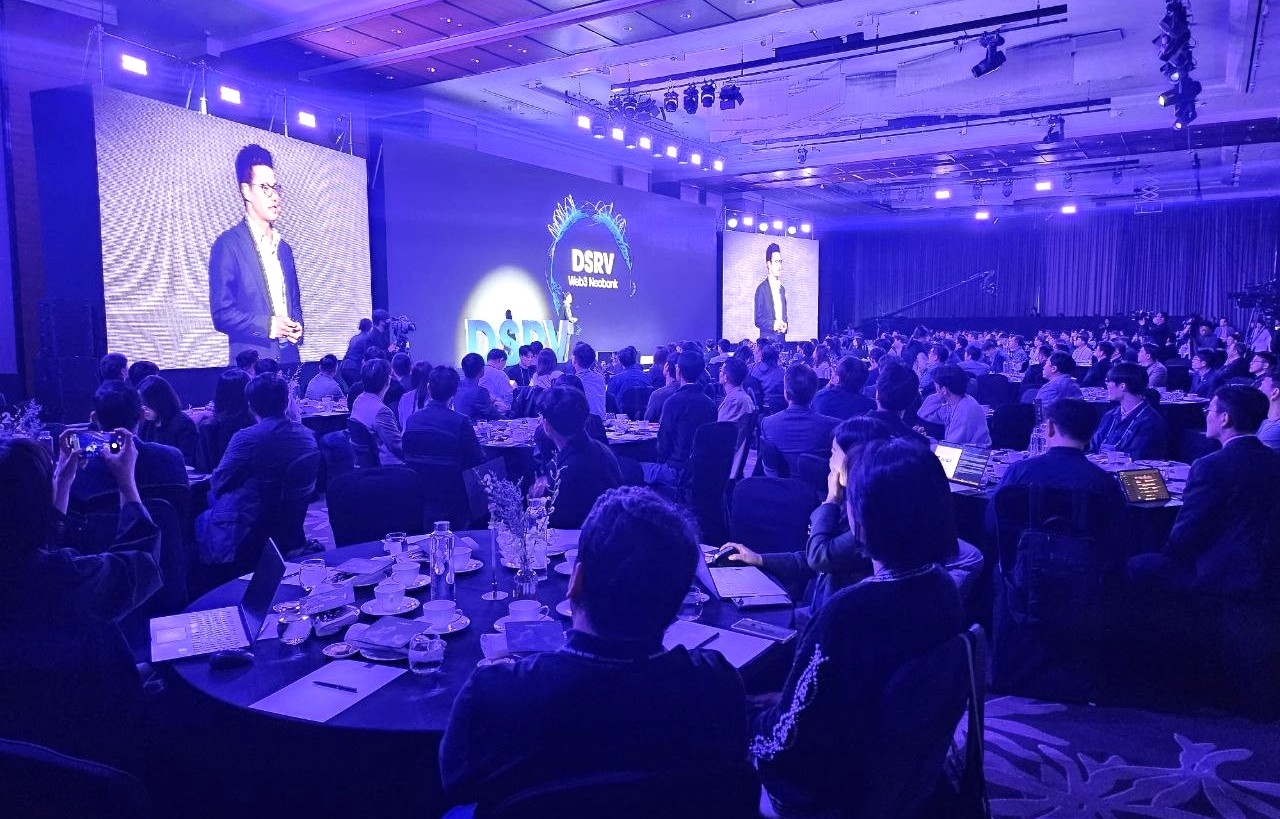
A closed-door blockchain event in Seoul’s Yeouido financial district offered a revealing snapshot of where mainstream finance and onchain innovators are talking past each other—at a moment when global markets are moving quickly toward tokenized assets and faster settlement.
The gathering, held Thursday UTC at a five-star hotel in Yeouido, focused on the idea of a blockchain-based ‘neobank’—a next-generation banking stack designed to compress payment and settlement times from days to seconds and to sharply reduce cross-border remittance costs. Presentations outlined how real-time settlement infrastructure could be built on blockchain rails, arguing that the biggest efficiencies come not from new speculative products but from redesigning the plumbing of money movement itself.
Yet the most memorable moment came not from the stage but from a nearby round table. A senior executive from a major Korean bank, who had listened quietly throughout the session, summed up the incumbents’ prevailing mood only after the final speaker finished. “Honestly, it still feels too difficult,” the executive said, citing technical complexity and regulatory uncertainty—and questioning why a large bank should move now rather than wait.
The comment captured a familiar divide. For traditional financial institutions, the core vocabulary is ‘risk’ and ‘feasibility’: what could break, what regulators might prohibit, and what could expose the firm to compliance or operational failures. That caution has long been a feature, not a bug, of a system built to avoid catastrophic mistakes. But advocates of tokenization argue that the same caution becomes less useful when the underlying architecture of markets is changing—because infrastructure shifts tend to be irreversible once network effects take hold.
One presenter framed the mismatch with a blunt question: if information can move in real time at near-zero cost, “why does money still move slowly and expensively?” The point resonated because it reflects quirks that users accept as normal, even though they stem largely from legacy design rather than technological limits. Messaging apps can deliver texts instantly across borders for free, but sending funds internationally can still take more than a day and consume multiple percentage points in fees. Even in domestic markets, retail investors can buy shares with a tap, yet final ownership and cash settlement often complete on a delayed schedule, with intermediaries—brokers, depositories, and clearing houses—processing the handoff.