
TokenPost.ai
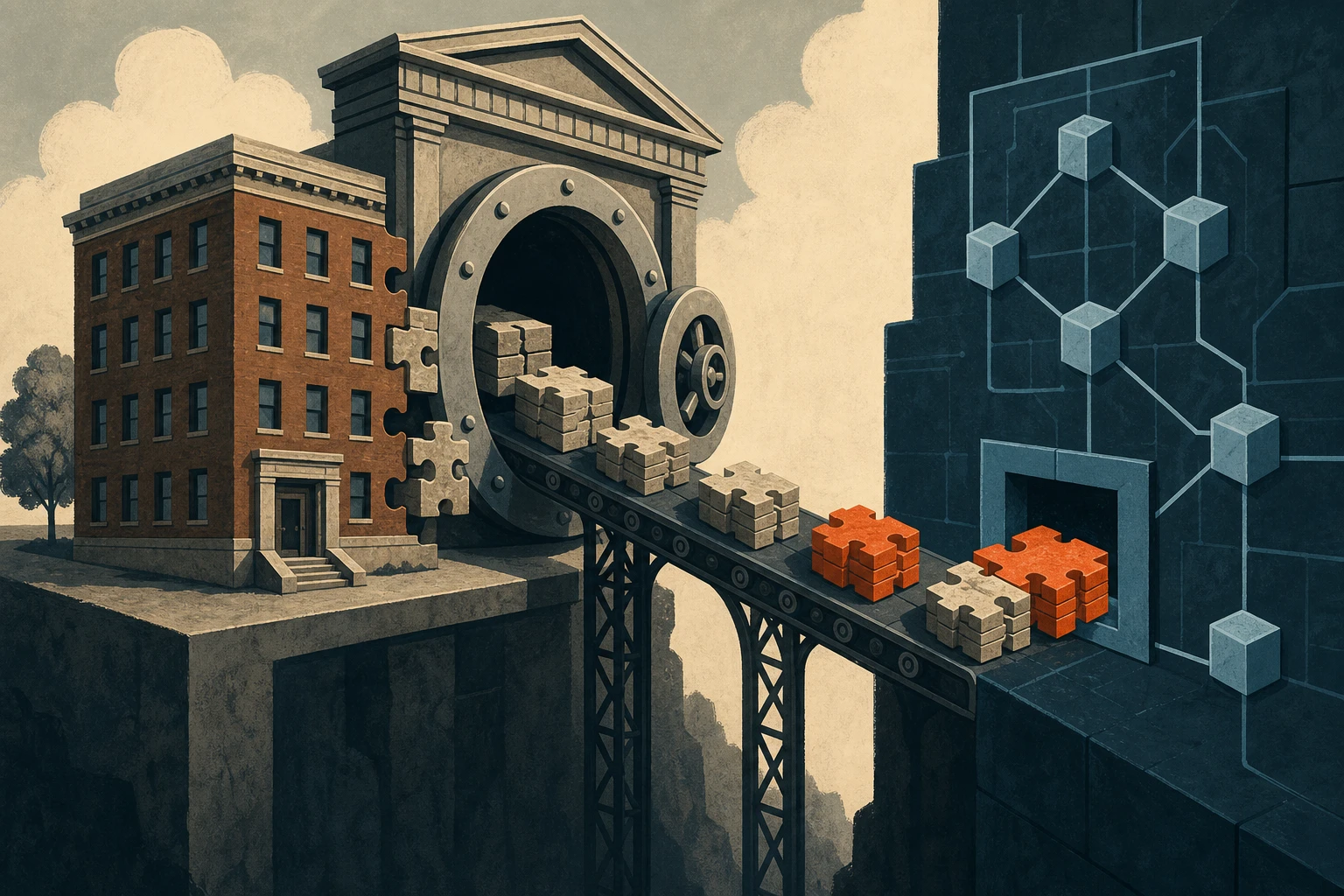
A new report from the University of Pennsylvania’s Wharton School argues that the fast-moving promise of real-world asset tokenization could become a source of instability if ‘24/7 tokens’ are built on top of assets that can’t be priced, sold, or redeemed at anything close to that speed.
Published in May 2026 by Wharton’s Financial Policy and Regulation Initiative (WIFPR), the paper—Tokenizing Real-World Assets—frames the sector as having moved beyond pilot programs, while warning that the next phase of growth will be defined less by smart-contract engineering and more by ‘liquidity design’ and regulation that matches what a token does economically rather than how it is built.
The authors—Lin William Cong of Nanyang Technological University, Simon Mayer of Carnegie Mellon University, and Daniel Rabetti of the National University of Singapore (and a visiting scholar at Harvard Business School)—survey activity across major incumbents and crypto-native firms, citing initiatives linked to asset managers such as BlackRock and Franklin Templeton as well as fintech and DeFi issuers including Figure Technologies and Ondo Finance.
Their central claim is straightforward: tokenization does not change an asset’s fundamentals. A tokenized loan pool carries the same default risk as the underlying loans. A tokenized deposit is only as safe as the issuing bank. What tokenization changes is market access—trading venue, investor reach, settlement speed, and ‘programmability’—not the credit quality, cash flows, or intrinsic valuation anchor of the asset itself.
For that reason, the report cautions against treating ‘RWA’ as a single category. Instead, it splits tokenized assets into three broad buckets, each with distinct risk and regulatory implications. The first is already-liquid instruments such as U.S. Treasuries, gold, and large-cap equities, where tokenization is primarily about integration into onchain markets—enabling hedging, collateralization, and portfolio rebalancing without leaving blockchain rails—rather than manufacturing liquidity that doesn’t already exist.
The second bucket is money-like claims such as stablecoins and tokenized deposits, designed to hold a fixed value and function as settlement tools. Here, the defining risk is a breakdown of ‘par redemption’ during periods of stress—effectively a digital version of a run dynamic.